
Your gateway to a free society
Book
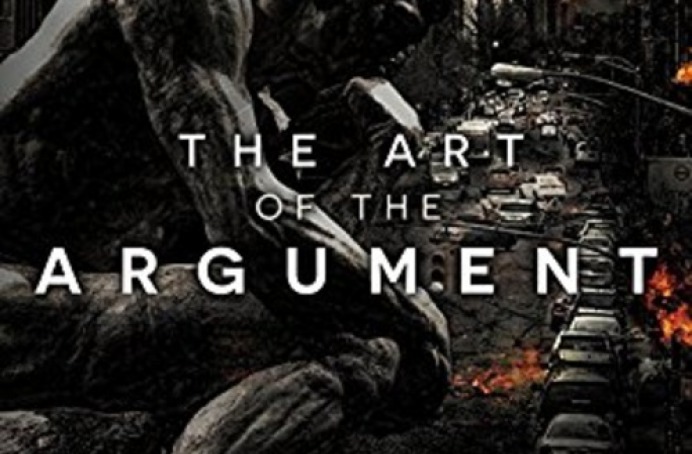
The Art Of The Argument
'The Art of the Argument' shocks the dying art of rational debate back to life, giving you the essential tools you need to fight the escalating sophistry, falsehoods and vicious personal attacks that have displaced intelligent conversations throughout the world. At a time when we need reasonable and empirical discussions more desperately than ever, 'The Art of the Argument' smashes through the brain-eating fogs of sophistry and mental manipulation, illuminating a path to benevolent power for all who wish to take it. Civilization is defined by our willingness and ability to use words instead of fists – in the absence of reason, violence rules. ‘The Art of the Argument’ gives you the intellectual ammunition – in one concentrated, entertaining and powerful package – to engage in truly productive, civilization-saving debates. Armed with this book, you will be empowered to speak truth to power, illuminate ignorance, shatter delusions and expose the dangerous sophists within your own life, and around the world.
aboutLiberty Portal
Liberty Portal is your gateway for free markets and free thinking. We aggregate open-sourced content to promote and popularize important people and lessons within the liberty movement.



suggested
Milton Friedman & Rose Friedman
Free To Choose
The international bestseller on the extent to which personal freedom has been eroded by government regulations and agencies while personal prosperity has been undermined by government spending and economic controls. New Foreword by the Authors; Index.
Read more
Alexis de Tocqueville
Democracy in America and Two Essays on America
A contemporary study of the early American nation and its evolving democracy, from a French aristocrat and sociologist
In 1831 Alexis de Tocqueville, a young French aristocrat and ambitious civil servant, set out from post-revolutionary France on a journey across America that would take him 9 months and cover 7,000 miles. The result wasDemocracy in America, a subtle and prescient analysis of the life and institutions of 19th-century America. Tocqueville looked to the flourishing deomcratic system in America as a possible model for post-revolutionary France, believing that the egalitarian ideals it enshrined reflected the spirit of the age and even divine will. His study of the strengths and weaknesses of an evolving democratic society has been quoted by every American president since Eisenhower, and remains a key point of reference for any discussion of the American nation or the democratic system.
This new edition is the only one that contains all Tocqueville's writings on America, including the rarely-translated Two Weeks in the Wilderness, an account of Tocqueville's travels in Michigan among the Iroquois, and Excursion to Lake Oneida.
For more than seventy years, Penguin has been the leading publisher of classic literature in the English-speaking world. With more than 1,700 titles, Penguin Classics represents a global bookshelf of the best works throughout history and across genres and disciplines. Readers trust the series to provide authoritative texts enhanced by introductions and notes by distinguished scholars and contemporary authors, as well as up-to-date translations by award-winning translators.
Read moreIn 1831 Alexis de Tocqueville, a young French aristocrat and ambitious civil servant, set out from post-revolutionary France on a journey across America that would take him 9 months and cover 7,000 miles. The result wasDemocracy in America, a subtle and prescient analysis of the life and institutions of 19th-century America. Tocqueville looked to the flourishing deomcratic system in America as a possible model for post-revolutionary France, believing that the egalitarian ideals it enshrined reflected the spirit of the age and even divine will. His study of the strengths and weaknesses of an evolving democratic society has been quoted by every American president since Eisenhower, and remains a key point of reference for any discussion of the American nation or the democratic system.
This new edition is the only one that contains all Tocqueville's writings on America, including the rarely-translated Two Weeks in the Wilderness, an account of Tocqueville's travels in Michigan among the Iroquois, and Excursion to Lake Oneida.
For more than seventy years, Penguin has been the leading publisher of classic literature in the English-speaking world. With more than 1,700 titles, Penguin Classics represents a global bookshelf of the best works throughout history and across genres and disciplines. Readers trust the series to provide authoritative texts enhanced by introductions and notes by distinguished scholars and contemporary authors, as well as up-to-date translations by award-winning translators.
Aaron Stupple
The Sovereign Child

Could it really be okay to let kids eat whatever they want? Sleep whenever they want? Watch whatever they want? If kids are completely free to make their own choices, they’ll develop damaging habits that will haunt them into adulthood. Surely parents have a duty to set a few limits.
But what if this conventional wisdom is wrong? What if our deepest ideas of how learning works, how knowledge grows, and the nature of personhood all point to the brute fact that parenting philosophies have missed a critical detail?
In The Sovereign Child, Aaron Stupple explains Taking Children Seriously, the only parenting philosophy that accounts for the fact that children are people—their reasons, desires, emotions, and creativity all work precisely the same way that those of adults do. Because of this, much of the conventional wisdom simply cannot work as intended.
Using examples gleaned from his years as a father of five, Aaron takes a close look at the unavoidable harms of rule enforcement and the startling alternatives available when parents never give up on treating children as if their reasons for their choices matter as much as anyone else's.
support
If you like what we do and want to support us, then you are a fine humanitarian. Click the link below to find out more.
Support the liberty movement
Want to get in touch?