
Your gateway to a free society
Book

The Future
Centuries in the future, an old man awakes from cryogenic sleep to face the judgement of a utopian society that barely survived his past abuses of power. In the vein of 'Atlas Shrugged,' philosopher Stefan Molyneux has created a compelling and powerful work of imagination. He vividly describes the wonderful future that mankind can achieve - and the barriers to getting there - and all that we need to leave behind to finally live in peace...
aboutLiberty Portal
Liberty Portal is your gateway for free markets and free thinking. We aggregate open-sourced content to promote and popularize important people and lessons within the liberty movement.


suggested
Hans Herman Hoppe
The Economics and Ethics of Private Property
"Do not steal" is an excellent principle of ethics; it is also the first principle of sound economic systems. In our time, no one has done more than Hans-Hermann Hoppe to elaborate on the sociological implications of this truth. And this is his great work on the topic.
Read more
Charles Murray
Human Accomplishment
The heart of Human Accomplishment is a series of enthralling descriptive chapters: on the giants in the arts and what sets them apart from the merely great; on the differences between great achievement in the arts and in the sciences; on the meta-inventions, 14 crucial leaps in human capacity to create great art and science; and on the patterns and trajectories of accomplishment across time and geography.
Read more
Milton Friedman
Capitalism And Freedom
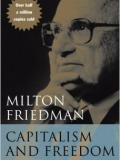
Selected by the Times Literary Supplement as one of the "hundred most influential books since the war"
How can we benefit from the promise of government while avoiding the threat it poses to individual freedom? In this classic book, Milton Friedman provides the definitive statement of his immensely influential economic philosophy—one in which competitive capitalism serves as both a device for achieving economic freedom and a necessary condition for political freedom. The result is an accessible text that has sold well over half a million copies in English, has been translated into eighteen languages, and shows every sign of becoming more and more influential as time goes on.
Read moreHow can we benefit from the promise of government while avoiding the threat it poses to individual freedom? In this classic book, Milton Friedman provides the definitive statement of his immensely influential economic philosophy—one in which competitive capitalism serves as both a device for achieving economic freedom and a necessary condition for political freedom. The result is an accessible text that has sold well over half a million copies in English, has been translated into eighteen languages, and shows every sign of becoming more and more influential as time goes on.
support
If you like what we do and want to support us, then you are a fine humanitarian. Click the link below to find out more.
Support the liberty movement
Want to get in touch?