
Your gateway to a free society
Book

The Handbook of Human Ownership: A Manual for New Tax Farmers
Hey – seriously - congratulations on your new political post!
If you are reading this, it means that you have ascended to the highest levels of government, so it’s really, re-ally important that you don’t do or say anything stupid, and screw things up for the rest of us.
The first thing to remember is that you are a figurehead, about as relevant to the direction of the state as a hood ornament is to the direction of a car – but you are a very important distraction, the “smiling face” of the fist of power. So hold your nose, kiss the babies, and just think how good you would look on a stamp. A stamp, for mail… No, not email, mail. Never mind, we’ll explain later.
Now, before we go into your media responsibilities, you must understand the true history of political power, so you don’t accidentally act on the naïve idealism you are required to project to
If you are reading this, it means that you have ascended to the highest levels of government, so it’s really, re-ally important that you don’t do or say anything stupid, and screw things up for the rest of us.
The first thing to remember is that you are a figurehead, about as relevant to the direction of the state as a hood ornament is to the direction of a car – but you are a very important distraction, the “smiling face” of the fist of power. So hold your nose, kiss the babies, and just think how good you would look on a stamp. A stamp, for mail… No, not email, mail. Never mind, we’ll explain later.
Now, before we go into your media responsibilities, you must understand the true history of political power, so you don’t accidentally act on the naïve idealism you are required to project to
aboutLiberty Portal
Liberty Portal is your gateway for free markets and free thinking. We aggregate open-sourced content to promote and popularize important people and lessons within the liberty movement.



suggested
Designs for Health
Vitamin D Supreme 5000 IU

- Upgrade Your Vitamin D K - Each small easy-swallow capsule features clinically relevant amounts of bioavailable vitamin d3 (5000 IU), combined with 2000 mcg of vitamin K1 and K2. GG is also included as a complementary bone and immune supportive compound.* (Note: This product has been reformulated to include more vitamin K and GG).
Peter Schiff
How An Economy Grows And Why It Crashes
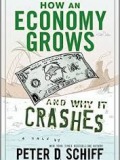
How an Economy Grows and Why it Crashes uses illustration, humor, and accessible storytelling to explain complex topics of economic growth and monetary systems. In it, economic expert and bestselling author of Crash Proof, Peter Schiff teams up with his brother Andrew to apply their signature "take no prisoners" logic to expose the glaring fallacies that have become so ingrained in our country?s economic conversation.
Read moreInspired by How an Economy Grows and Why It Doesn't? a previously published book by the Schiffs? father Irwin, a widely published economist and activist?How an Economy Grows and Why It Crashes incorporates the spirit of the original while tackling the latest economic issues.With wit and humor, the Schiffs explain the roots of economic growth, the uses of capital, the destructive nature of consumer credit, the source of inflation, the importance of trade, savings, and risk, and many other topical principles of economics.
The tales told here may appear simple of the surface, but they will leave you with a powerful understanding of How an Economy Grows and Why it Crashes.
Bob Murphy
Chaos Theory
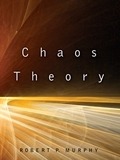
Among the most advanced topics in the literature in the Austro-libertarian milieu is that which deals with the workings of the fully free society, that is, the society with no state, or anarcho-capitalism. Robert Murphy deals with this head on, and makes the first full contribution to this literature in the new century. Working within a Rothbardian framework, he takes up the challenge of Hans Hoppe regarding the role of market insurance in property security to extend the analysis to the security of person. His applications are part empirical and part speculative, but unfailingly provocative, rigorous, and thoughtful. The title itself refers to the supposed chaos that results from eliminating the state but Murphy shows that out of chaos grows an ordered liberty. Anyone interested in exploring the farthest reaches of anarchist theory must come to terms with Murphy's account. This volume contains:Foreword Introduction (Jeremy Sapienza) I. Private Law II. Private Defens
support
If you like what we do and want to support us, then you are a fine humanitarian. Click the link below to find out more.
Support the liberty movement
Want to get in touch?