
Your gateway to a free society
Book

Practical Anarchy: The Freedom of the Future
Imagine a world without government – this thought exercise seems impossible for many, because the power and reach of state monopolies is so omnipresent in our lives. However, there is no rational, economic or moral reason to assume that governments are necessary for the provision of roads, healthcare, charity, dispute resolution, courts, policing, national defense, jails – or any of the other services currently monopolized by the state.
Governments are extremely dangerous, responsible for over 250 million deaths in the 20th century alone – if it is possible to run a society without a government, surely this is something that we must strive towards as a species.
Practical Anarchy makes strong case for the private – that is to say voluntary – provision for public services. It reveals the idea of government as a dangerous and unnecessary anachronism, and points the way towards a peaceful and voluntary future for mankind.
Governments are extremely dangerous, responsible for over 250 million deaths in the 20th century alone – if it is possible to run a society without a government, surely this is something that we must strive towards as a species.
Practical Anarchy makes strong case for the private – that is to say voluntary – provision for public services. It reveals the idea of government as a dangerous and unnecessary anachronism, and points the way towards a peaceful and voluntary future for mankind.
aboutLiberty Portal
Liberty Portal is your gateway for free markets and free thinking. We aggregate open-sourced content to promote and popularize important people and lessons within the liberty movement.




suggested
Peter Schiff
How An Economy Grows And Why It Crashes
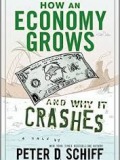
How an Economy Grows and Why it Crashes uses illustration, humor, and accessible storytelling to explain complex topics of economic growth and monetary systems. In it, economic expert and bestselling author of Crash Proof, Peter Schiff teams up with his brother Andrew to apply their signature "take no prisoners" logic to expose the glaring fallacies that have become so ingrained in our country?s economic conversation.
Read moreInspired by How an Economy Grows and Why It Doesn't? a previously published book by the Schiffs? father Irwin, a widely published economist and activist?How an Economy Grows and Why It Crashes incorporates the spirit of the original while tackling the latest economic issues.With wit and humor, the Schiffs explain the roots of economic growth, the uses of capital, the destructive nature of consumer credit, the source of inflation, the importance of trade, savings, and risk, and many other topical principles of economics.
The tales told here may appear simple of the surface, but they will leave you with a powerful understanding of How an Economy Grows and Why it Crashes.
Stefan Molyneux
The Future

Centuries in the future, an old man awakes from cryogenic sleep to face the judgement of a utopian society that barely survived his past abuses of power. In the vein of 'Atlas Shrugged,' philosopher Stefan Molyneux has created a compelling and powerful work of imagination. He vividly describes the wonderful future that mankind can achieve - and the barriers to getting there - and all that we need to leave behind to finally live in peace...
Read more
Scott Horton
Enough Already: Time to End the War on Terrorism
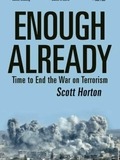
Scott Horton’s new book, Enough Already might have taken its title from a line in the book’s introduction: America’s war policy since at least the Carter Administration has been ‘a policy in search of a reason.’ As Horton painstakingly lays bare, in virtually none of the military conflicts the United States has chosen to fight in since the 1970s was our security ever genuinely threatened. His ultimate solution is the only one that has any chance of preserving American security and giving us a chance to be ready in case we do face a genuine threat in the future: end the pointless and self-defeating forever wars. All of them.”
Lt. Col. Daniel L. Davis, (USA ret.) 4-time combat deployer, two-time winner of the Bronze Star Medal, and author of Eleventh Hour in 2020 America: How American Foreign Policy Got Jacked Up and What the Next Administration Can Do About It.
Read moreLt. Col. Daniel L. Davis, (USA ret.) 4-time combat deployer, two-time winner of the Bronze Star Medal, and author of Eleventh Hour in 2020 America: How American Foreign Policy Got Jacked Up and What the Next Administration Can Do About It.
support
If you like what we do and want to support us, then you are a fine humanitarian. Click the link below to find out more.
Support the liberty movement
Want to get in touch?