
Your gateway to a free society
Book
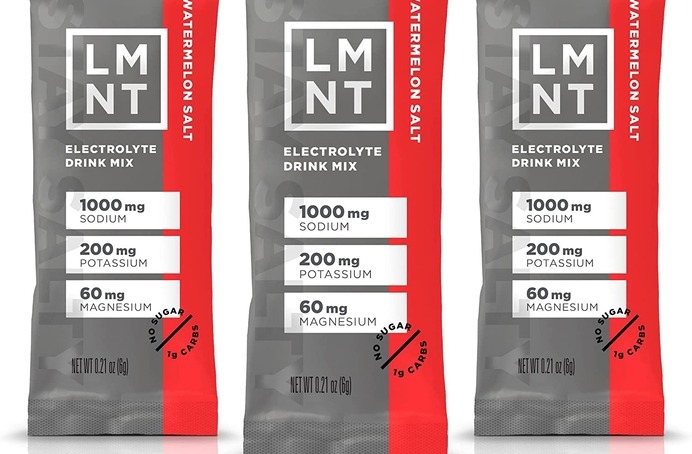
LMNT Electrolyte Powder Packs
- THE BEST ELECTROLYTE DRINK MIX EVER: LMNT is a tasty electrolyte drink mix with everything you need and nothing you don't. LMNT is perfect for anyone interested in a keto, low-carb or intermittent fasting lifestyle, and a gluten-free diet. Our electrolyte supplement fights against the low-carb fatigue and keto fog to keep energy levels high
aboutLiberty Portal
Liberty Portal is your gateway for free markets and free thinking. We aggregate open-sourced content to promote and popularize important people and lessons within the liberty movement.




suggested
Robert Murphy
The Politically Incorrect Guide To Capitalism
Most commonly accepted economic "facts" are wrong Here's the unvarnished, politically incorrect truth. The liberal media and propagandists masquerading as educators have filled the world--and deformed public policy--with politically correct errors about capitalism and economics in general. In The Politically Incorrect Guide(tm) to Capitalism, myth-busting professor Robert P. Murphy, a scholar and frequent speaker at the Ludwig von Mises Institute, cuts through all their nonsense, shattering liberal myths and fashionable socialist cliches to set the record straight. Murphy starts with a basic explanation of what capitalism really is, and then dives fearlessly into hot topics like:
* Outsourcing (why it's good for Americans) and zoning restrictions (why they're not)
* Why central planning has never worked and never will
* How prices operate in a free market (and why socialist schemes like rent control always backfire)
* How labor unions actually hurt workers more than they help them
* Why increasing the minimum wage is always a bad idea
* Why the free market is the best guard against racism
* How capitalism will save the environment--and why Communist countries were the most polluted on earth
* Raising taxes: why it is never "responsible"
* Why no genuine advocate for the downtrodden could endorse the dehumanizing Welfare State
* The single biggest myth underlying the public's support for government regulation of business
* Antitrust suits: usually filed by firms that lose in free competition
* How tariffs and other restrictions "protect" privileged workers but make other Americans poorer
* The IMF and World Bank: why they don't help poor countries
* Plus: Are you a capitalist pig? Take the quiz and find out! Breezy, witty, but always clear, precise, and elegantly reasoned, The Politically Incorrect Guide(tm) to Capitalism is a solid and entertaining guide to free market economics. With his twelve-step plan for understanding the free market, Murphy shows why conservatives should resist attempts to socialize America and fight spiritedly for the free market.
Read more* Outsourcing (why it's good for Americans) and zoning restrictions (why they're not)
* Why central planning has never worked and never will
* How prices operate in a free market (and why socialist schemes like rent control always backfire)
* How labor unions actually hurt workers more than they help them
* Why increasing the minimum wage is always a bad idea
* Why the free market is the best guard against racism
* How capitalism will save the environment--and why Communist countries were the most polluted on earth
* Raising taxes: why it is never "responsible"
* Why no genuine advocate for the downtrodden could endorse the dehumanizing Welfare State
* The single biggest myth underlying the public's support for government regulation of business
* Antitrust suits: usually filed by firms that lose in free competition
* How tariffs and other restrictions "protect" privileged workers but make other Americans poorer
* The IMF and World Bank: why they don't help poor countries
* Plus: Are you a capitalist pig? Take the quiz and find out! Breezy, witty, but always clear, precise, and elegantly reasoned, The Politically Incorrect Guide(tm) to Capitalism is a solid and entertaining guide to free market economics. With his twelve-step plan for understanding the free market, Murphy shows why conservatives should resist attempts to socialize America and fight spiritedly for the free market.
Frederic Bastiat
The Law
Read this for FREE at mises.org
Ayn Rand
The Virtue Of Selfishness

Ayn Rand here sets forth the moral principles of Objectivism, the philosophy that holds human life—the life proper to a rational being—as the standard of moral values and regards altruism as incompatible with man's nature, with the creative requirements of his survival, and with a free society.
Read more
support
If you like what we do and want to support us, then you are a fine humanitarian. Click the link below to find out more.
Support the liberty movement
Want to get in touch?