
Your gateway to a free society
Book
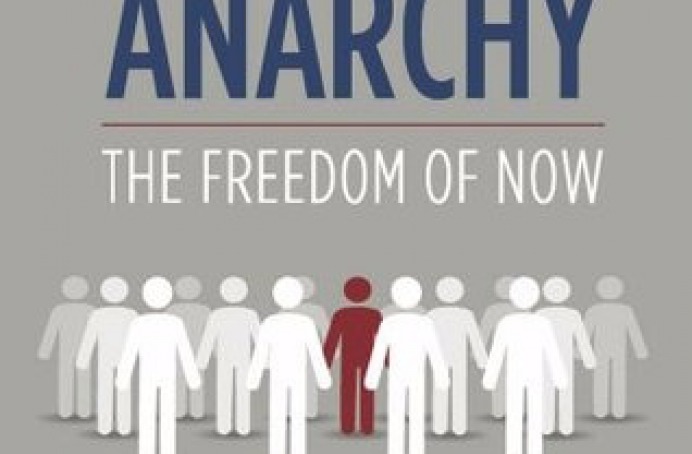
Everyday Anarchy: The Freedom of Now
The word “anarchy” evokes images of dangerous mobs, spiky-haired youths hurling garbage cans through Starbucks windows, and the chaos of the war of all against all.
However, the word “anarchy” simply means “without rulers” - and this state of affairs is something we desperately desire and defend in so many areas of our own lives. If a political ruler were to tell us who to marry, what to learn, and which job to take, we would rebel against such tyrannical intrusions on our freedoms. If the government were to tell us what to read, want to watch and what to listen to, we would justifiably cry “censorship” and lead the charge against such mind control.
How can we reconcile this contradiction? Is being “without rulers” good, or bad? How can we fear something so terribly, while at the same time treasuring it so mightily?
“Everyday Anarchy” addresses this challenge head-on, arguing that being free of rulers is not something to fear - personally or politically - but rather a goal that we must constantly strive
However, the word “anarchy” simply means “without rulers” - and this state of affairs is something we desperately desire and defend in so many areas of our own lives. If a political ruler were to tell us who to marry, what to learn, and which job to take, we would rebel against such tyrannical intrusions on our freedoms. If the government were to tell us what to read, want to watch and what to listen to, we would justifiably cry “censorship” and lead the charge against such mind control.
How can we reconcile this contradiction? Is being “without rulers” good, or bad? How can we fear something so terribly, while at the same time treasuring it so mightily?
“Everyday Anarchy” addresses this challenge head-on, arguing that being free of rulers is not something to fear - personally or politically - but rather a goal that we must constantly strive
aboutLiberty Portal
Liberty Portal is your gateway for free markets and free thinking. We aggregate open-sourced content to promote and popularize important people and lessons within the liberty movement.


suggested
Bob Murphy
Chaos Theory
Among the most advanced topics in the literature in the Austro-libertarian milieu is that which deals with the workings of the fully free society, that is, the society with no state, or anarcho-capitalism. Robert Murphy deals with this head on, and makes the first full contribution to this literature in the new century. Working within a Rothbardian framework, he takes up the challenge of Hans Hoppe regarding the role of market insurance in property security to extend the analysis to the security of person. His applications are part empirical and part speculative, but unfailingly provocative, rigorous, and thoughtful. The title itself refers to the supposed chaos that results from eliminating the state but Murphy shows that out of chaos grows an ordered liberty. Anyone interested in exploring the farthest reaches of anarchist theory must come to terms with Murphy's account. This volume contains:Foreword Introduction (Jeremy Sapienza) I. Private Law II. Private Defens
Robert Kiyosaki
Rich Dad, Poor Dad
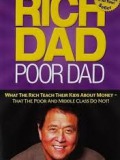
Rich Dad Poor Dad, the #1 Personal Finance book of all time, tells the story of Robert Kiyosaki and his two dads—his real father and the father of his best friend, his rich dad—and the ways in which both men shaped his thoughts about money and investing. The book explodes the myth that you need to earn a high income to be rich and explains the difference between working for money and having your money work for you.
Read more
Christina Hoff Sommers
Who Stole Feminism?
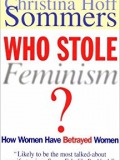
Philosophy professor Christina Sommers has exposed a disturbing development: how a group of zealots, claiming to speak for all women, are promoting a dangerous new agenda that threatens our most cherished ideals and sets women against men in all spheres of life. In case after case, Sommers shows how these extremists have propped up their arguments with highly questionable but well-funded research, presenting inflammatory and often inaccurate information and stifling any semblance of free and open scrutiny. Trumpeted as orthodoxy, the resulting "findings" on everything from rape to domestic abuse to economic bias to the supposed crisis in girls' self-esteem perpetuate a view of women as victims of the "patriarchy". Moreover, these arguments and the supposed facts on which they are based have had enormous influence beyond the academy, where they have shaken the foundations of our educational, scientific, and legal institutions and have fostered resentment and alienation in our private lives. Despite its current dominance, Sommers maintains, such a breed of feminism is at odds with the real aspirations and values of most American women and undermines the cause of true equality. Who Stole Feminism? is a call to arms that will enrage or inspire, but cannot be ignored.
Read more
support
If you like what we do and want to support us, then you are a fine humanitarian. Click the link below to find out more.
Support the liberty movement
Want to get in touch?